The general contractor model was not designed for modular delivery.
For decades, multi-housing development has followed a familiar pattern: a developer hires a general contractor, the GC coordinates a network of subcontractors, and the building takes shape on site over 12 to 24 months. It works, but it introduces coordination risk, cost uncertainty, and timeline exposure at every handoff.
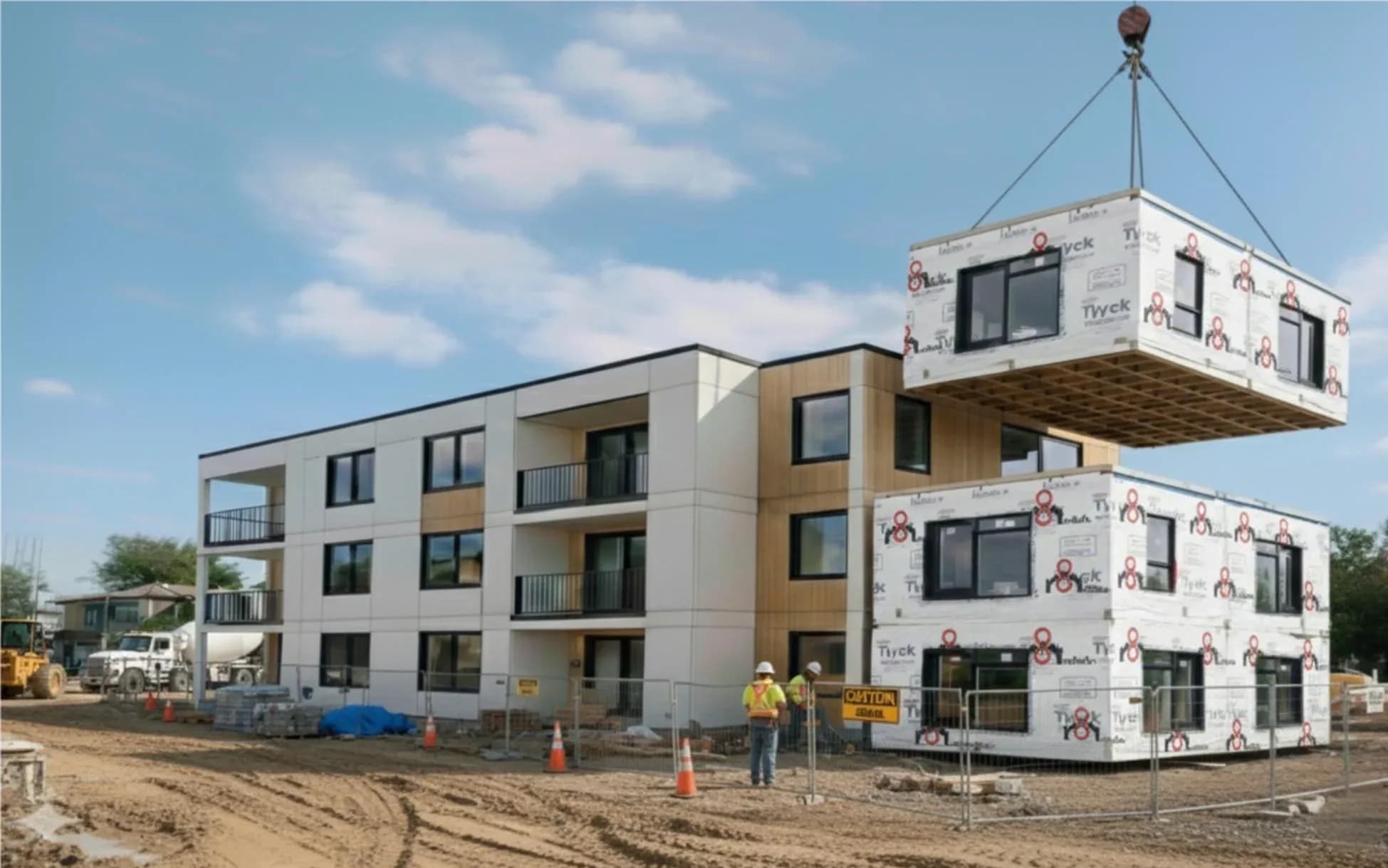
Modular construction challenges this model because it consolidates most of the building work inside a factory, under a single production system. The traditional role of the GC — coordinating trades, managing site logistics, and absorbing schedule risk — becomes less relevant when 80 to 90 percent of the building is completed before it reaches the site.
Where the conventional model breaks down.
The biggest weakness of the GC model is the chain of handoffs. Foundations to framing, framing to mechanical, mechanical to finishing — each transition introduces the potential for delay, miscommunication, and cost escalation. In a tight labor market, any one subcontractor falling behind can cascade into weeks of delay for the entire project.
The GC model distributes accountability across a dozen subcontractors. The turnkey model concentrates it in one delivery partner. For developers managing risk, that concentration is an advantage.
Developers are increasingly recognizing that the GC model also distributes accountability in ways that make it difficult to hold anyone responsible when things go wrong. When the plumber blames the electrician, and the electrician blames the framer, the developer is left managing disputes instead of managing a project.
The GC model introduces coordination risk at every trade handoff, with each transition a potential source of delay.
Labor shortages amplify the vulnerability of subcontractor-dependent delivery models.
Turnkey modular delivery consolidates accountability under a single contract and delivery partner.
Factory production eliminates most on-site trade coordination, reducing the role of the GC.
Fixed-price contracts remove cost escalation risk that is inherent in multi-subcontractor projects.
What integrated delivery looks like.
The alternative to the GC model is integrated delivery, where a single entity manages the full project scope from design through occupancy. In the modular context, this means the same organization that designs the building also manufactures the modules, manages site assembly, and delivers the finished product. The developer gets a single point of contact, a single contract, and a single timeline.
This approach does not eliminate all risk. Site conditions, permitting delays, and utility connections still require coordination. But it removes the largest source of risk in conventional multi-housing: the fragmented chain of subcontractors, each with their own schedule, their own pricing, and their own interpretation of the scope.