The overlap is where the real time savings happen.
In conventional construction, every phase waits for the one before it. You cannot frame until foundations cure. You cannot close the envelope until framing is complete. You cannot finish interiors until the building is weather-tight. This sequential dependency is the single biggest driver of long project timelines — and the single biggest opportunity modular construction addresses.
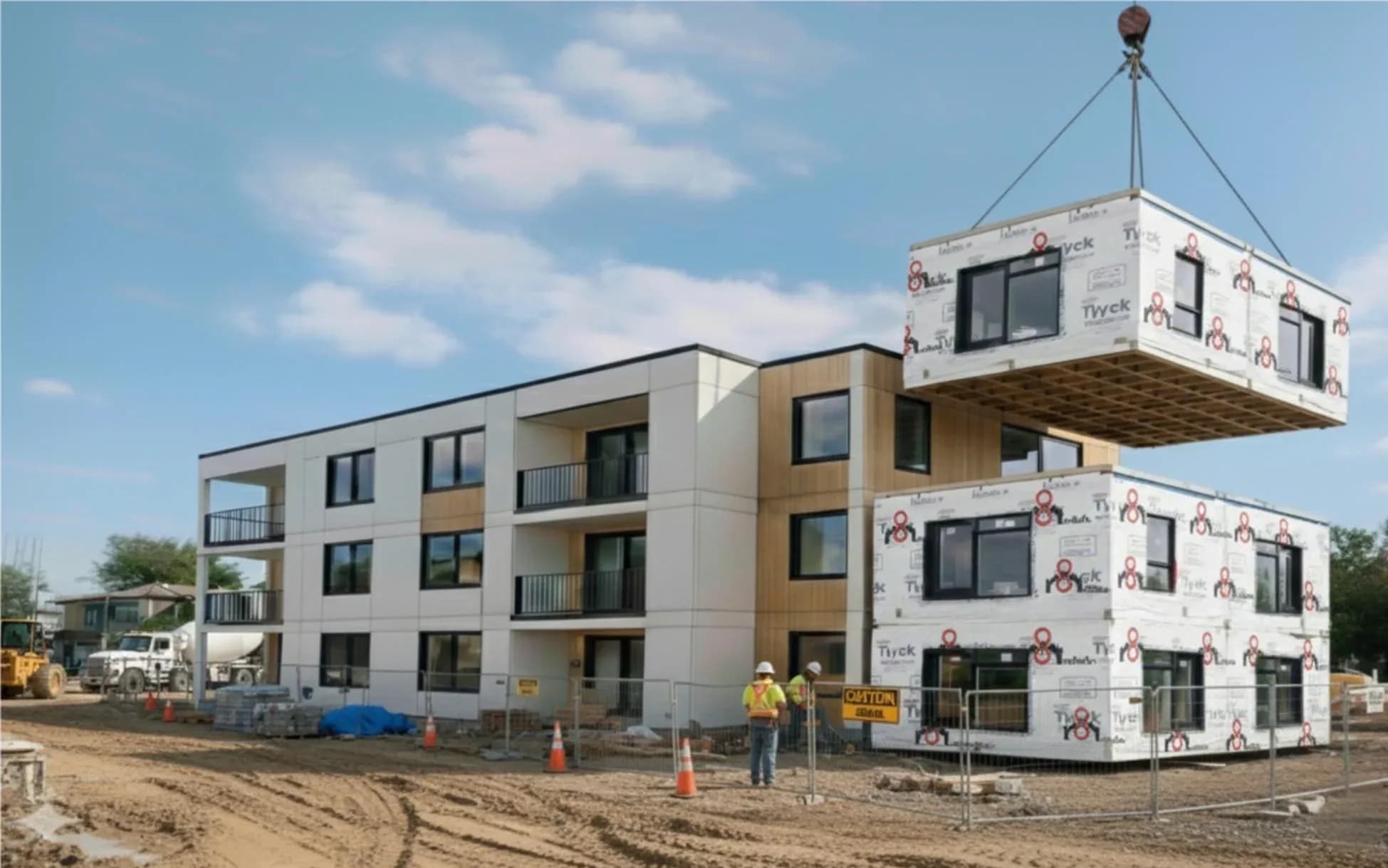
Parallel construction changes the equation by splitting the project into two simultaneous workstreams. While the site team excavates, pours foundations, and runs underground services, the factory team is building fully finished modules — complete with drywall, flooring, cabinetry, plumbing, and electrical. When the site is ready, the modules arrive and are set in place over a matter of days.
How the timeline breaks down.
A typical 12-unit multi-housing project built conventionally takes 14 to 18 months from permit to occupancy. With parallel construction, the same project can be delivered in 8 to 10 months. The savings come not from working faster at any single step, but from eliminating the gaps between steps.
Parallel construction does not speed up any single trade. It removes the waiting time between trades — and that waiting time is where most project delays accumulate.
Weather is another factor. In Quebec, winter conditions can shut down conventional job sites for weeks at a time. Factory production is immune to weather delays, which means modules continue to progress even when outdoor work is paused. By the time spring arrives and site work resumes, the modules are ready to ship.
Site preparation and module fabrication happen at the same time, overlapping 60 to 70 percent of the total build schedule.
Factory-built modules arrive fully finished, reducing on-site work to assembly and connection.
Weather delays affect only the site workstream, not the factory production line.
Compressed timelines reduce financing costs, interest carry, and vacancy periods.
What this means for project economics.
Shorter delivery timelines translate directly into lower project costs. Every month saved means reduced interest on construction financing, earlier rental income, and less exposure to material price escalation. For developers working with tight margins, parallel construction turns the modular approach from a construction method into a financial strategy.
For municipalities trying to meet housing targets, the math is even more compelling. A project that delivers six months sooner means families housed six months sooner, tax revenue arriving six months earlier, and public pressure relieved before the next election cycle.