New provincial programs signal a shift toward factory-built housing.
Quebec has announced expanded incentives for factory-built housing, adding new funding streams and regulatory accommodations designed to make modular construction a viable option for municipalities and developers across the province. The move reflects growing recognition that conventional construction methods alone cannot address the province's housing deficit.
The incentives include accelerated permitting pathways for projects using CSA A277 certified modules, financial support for municipalities piloting modular housing, and a streamlined inspection process that recognizes factory-based quality control. Together, these measures remove several of the bureaucratic barriers that have historically slowed modular adoption in Quebec.
What the incentives cover.
The most significant change is the introduction of a provincial pre-approval process for modular building systems. Under the new framework, manufacturers whose modules meet CSA A277 standards can receive a blanket certification that applies across municipalities, eliminating the need for project-by-project code review of the factory-built components.
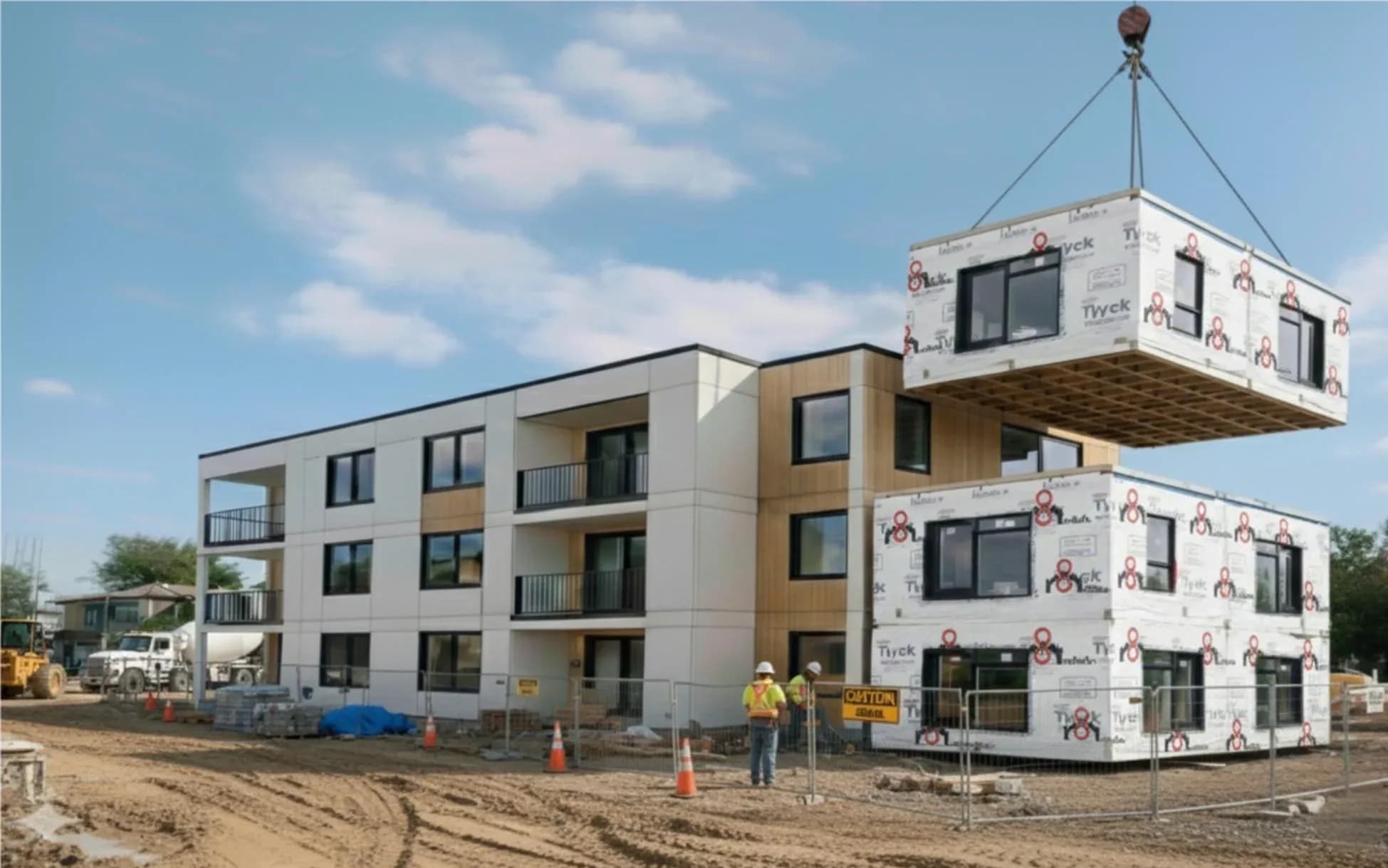
When a module arrives on site already certified, the local building department can focus its review on site-specific work — foundations, connections, and landscaping — rather than re-inspecting what the factory has already verified.
Financial incentives are also part of the package. The province is offering matching grants to municipalities that include modular construction in their housing development plans, along with interest rate reductions on qualifying construction loans for projects that use factory-built methods.
Accelerated permitting for CSA A277 certified modular building systems.
Provincial pre-approval process eliminates redundant municipal code reviews.
Matching grants for municipalities incorporating modular housing into development plans.
Interest rate reductions on construction financing for qualifying factory-built projects.
What this means for modular builders and developers.
For companies like 8Module, these incentives reduce two of the biggest friction points in modular adoption: regulatory uncertainty and financing costs. With a provincial pre-approval in place, developers can budget and schedule with more confidence, knowing that the permitting process will not introduce unexpected delays.
For municipalities facing housing pressure, the financial incentives make modular projects more competitive in the budget cycle. A project that qualifies for matching grants and reduced interest rates can deliver more units per dollar than a conventional build — and deliver them faster.